I Begin With Understanding

In the past five months, I have learned a great deal more about life than I had in all the years before. This flood of knowledge has brought a profound change within me, leading to an extraordinary transformation that extends to how I see myself, how I treat others, how I view the way business should be done, and, most importantly, how to be human. 

I judged myself as someone who had failed miserably at building a business. For a long time, I thought I built Vizier simply because I needed a way to live, a way to survive—and yes, it has been a great one. But as time went on, I started to feel this deep urge to build more, to achieve more, and to grow bigger. What began as a side hustle slowly turned into a viable institution, with real responsibilities. Today, it’s a home for five people on my team, and together we’ve worked on so many projects. Our branding pillars stand firm. I know what this institution values, and live by them. For me, “stability” was always the guiding word. But suddenly, without planning it, the word “upscale” took its place. That shift surprised me, but it also excited me. Still, when I look back at my hiring decisions, the capital people poured in to help me, all in the name of stability—I can see how much of it ended in failure. These were lessons I had to learn the hard way. The truth is, I knew nothing about business beyond branding (the surface-level stuff). And that ignorance made me so afraid of risk. In some ways, I’m still that person—still cautious, still fearful. But at least now I understand where I stand, and who I am in this journey.

My purpose in writing this post is for those who come here curious about how I navigated failure and what I am doing now to try to do things better. If you’re here to find out whether my attempts have worked or not, I have to be honest: I can’t give you that answer. I don’t know if this attempt will count as progress. But I do know that taking this step is, without doubt, a significant part of my growth.

Lesson #1: I Understand Now that Building the Business Cannot Be Without Building its People

I realized my past mistakes: I had hired capable people. I looked at their CV and was awed by their impressive numbers and the fantastic job descriptions of their past work. I called them for an interview, felt a match, and directly hired them. Found out that I was not satisfied with their work, and kicked them after probation, or kicked them too long for the leeching on my budget. To be honest, writing this made me upset at myself. Here are things that I did wrong:

  • I had hired entirely based on CV and interview. I saw a match, NOT a fit. My shortcoming was judging them as capable from the onset of our first meeting. I was not being critical—people can write whatever in their resume, but I failed to question how they achieved it. I was transforming myself into a results-oriented boss, rather than a process-oriented mentor. See, this is why this is my biggest mistake. When it comes to work, the process and the attention to detail are what define success in Vizier. We deal with people; our sales are about making them trust our services and showing them the process. I fatally hired people who sold results and were incapable of explaining the process. It’s like I was seeking people to sell the ice cream machine, but ended up hiring someone who sold the ice cream itself.
  • Once they were onboarded, I forgot to give them space to grow. During their probation, I let them figure things out on their own, making this their first (and biggest) test. This was wrong. Their biggest test should have been after they understood their full responsibility, grasped the stated goals, were provided with sufficient company foundations, and, if needed, received skill onboarding. They should then have been given specific KPIs to achieve. I should have been there as a railing, as guiding hands. Instead, I was setting them up to fail from the beginning. To grow, a plant needs water (as a means of external capital) and pressure (as a means of internal motivation)–I was not providing both.
  • I took too long to let go. I made the decision to hire too personally; I believed that if they failed, it meant I had failed. But that’s not true. In some cases, people are simply not who we are looking for. Their failure may be a lesson for my hiring decisions, but it is not a fixed proof of whether I am right or wrong. In some cases, people do take advantage of us or take their work for granted, and when that continues even after we’ve given feedback, nudges, and help, the sooner we let them go, the better it is for the business.

What I am trying to do now is not repeat the above mistakes and maintain this realization in every one of my current hiring and onboarding decisions. I also have to constantly remember that my team members are human first before they are my team members.

Lesson #2: I Understand Now That I Cannot Lead Without Knowing Who I Am

I thought I knew myself. I had gone through difficult experiences in life that I believed had uncovered who I am. But it turns out that was only a small slice of me. Knowing that I am resilient and that I work well under pressure does not mean I truly understand myself. Real understanding doesn’t start from the good things—it begins with facing the darker side of me. My fears and how those fears create limiting beliefs that shape my behavior.

At the beginning of this year, I was fortunate enough to be introduced to the people at Talentbox. They embraced me like family. I had the chance to facilitate some of their training, and in return, they gave me a workshop that allowed me to have a deep conversation with myself. In this workshop, I interviewed the people closest to me and asked for their feedback. From that feedback, I was able to define my biggest current challenge. Not only did I learn how this challenge limits me, but I also discovered how to face the next fear that might emerge as I continue to grow. I have so many thoughts about this workshop, but I’ll save those for a separate post.

What I realized was a stark truth about why I keep having similar communication problems with my team. Why I resist feedback, and why my own feedback to others has often been ineffective. These problems aren’t just about techniques—they come from within. I wondered how I had managed people all this time without truly understanding myself: how I communicate, what my preferences are, how I work, and what blind spots I carry. No wonder it always felt chaotic. As I began to work through these patterns, I found myself less consumed by constant troubleshooting. And with that, I gained more space to think about my goals, the business’s goals, and the essential components of building Vizier.

Lesson #3: I Understand Now That Being Assertive Helps A LOT

Laugh at me if you want, but yes—if I can avoid conflict and make people happy, I will. If I can say something that makes a bad situation sound lighter, even when it’s actually vital information to hear, I usually will. I hate to admit this, but I grew up around loud, angry people, and the thought of putting myself back in the middle of that kind of situation is something I would rather avoid.

However, I’ve also learned that this habit makes my voice shaky and untrustworthy. People often feel the need to double-check my words from different angles, and I don’t like that. It takes real courage for me to step away from this pattern, to say what’s on my mind clearly, and at the same time remain empathetic.

When I dug deeper into the reason, I found that I often put myself in other people’s shoes too much. I project my own fears onto them, which ultimately creates more chaos than clarity. If I’m afraid someone can’t take my feedback, then I act in a way that shows I don’t believe they’re capable of working with me. And because of that, eventually, they can’t. 

Now, I’m learning to break that cycle. I may not always get it right, but I’ve become more confident in voicing my thoughts—even when it leads to conflict, or sometimes creates more problems. Because I’d love how it feels for the long run, honest communication builds trust, and that is worth the discomfort.

In the end, I see this season as a chapter of growth. I am learning that building a business is not just about strategies, numbers, or even people—it starts with me. The more I understand myself, the more space I have to guide Vizier with clarity and purpose. I don’t have all the answers yet, and maybe I never will, but I know that every step, every lesson, and every challenge is shaping me into the kind of leader who can build something that truly lasts.

Degustation

The word degustation means what it says: not “consumption of” but “tasting”, “savoring” … You are in the country of the art of good food, and this degustation is very like what you do in art gallery, unless your soul is lost

Eleanor Clark, The Oysters of Locmariaquer


When I encountered this word, it lingered on my tongue and echoed in my mind throughout the day. Like a spell, I found myself whispering it over and over. The way it rolls with the emphasis on the d, glides through the g, and then strikes with the crisp t—it’s as if the entire word is a harmonious symphony contained in a single breath. However captivating its pronunciation, it is the meaning that got me thinking. 

The idea of savoring time—of making it the centerpiece, the grand protocol of certain days—felt profoundly gripping. Then I realize I am locked by one impertinent challenge: my hustle-driven mindset and dopamine-craving brain seemed utterly incompatible with the art of savoring. An action as seemingly trivial as reaching for my phone in the middle of an epic reading, or drifting to thoughts of food during a conversation, or feeling restless during a free day while obsessively thinking about the next work to tackle—this is how my brain engages with time. This entire reflection forms the backdrop of what I want to pursue in 2025: the deliberate honing of my ability to savor. 

Yet, the act of savoring is not just about tasting the richness of time—it is also about cultivating self-awareness. Recognizing and addressing the patterns that steal our attention requires a deliberate understanding of the self, a state of heightened metacognition. In fact, self awareness is all about degustation–savoring, knowing, realizing, not letting moments fleeting carelessly.

Self-Awareness in The Perspective of Science

For thousands of years, theologians and philosophers have emphasized the significance of human self-consciousness—the capacity to reflect upon our own psyche and nature—as a defining feature of our kind. Similarly, Carl Linnaeus’s revolutionary biological classification described our species with the phrase “Homo. Nosce te ipsum” (“Man. Those that know themselves”). 

Psychologists term self-awareness as metacognition, which translates to contemplating our thoughts–thinking about thinking, derived from the Greek “meta,” signifying “beyond” or “after.” The emergent field of metacognitive neuroscience is unveiling the intricacies of human introspection. Merging pioneering lab experiments with advanced brain imaging methods, we’re acquiring a deeper understanding of how self-awareness operates from a mental and biological standpoint. We have learned that specific brain networks activate during self-reflection due to the development of advanced brain imaging methods like functional magnetic resonance imaging (fMRI). Moreover, any harm or ailment affecting these networks can result in profound disruptions in self-awareness.

The current literature’s explanation of self-awareness delivers the same song. Increasing self-awareness enables us to actively govern our thoughts, emotions, and actions rather than being ruled by them. Understanding oneself is the foundation for goal-setting. If we’re sufficiently self-aware, recognizing our strengths and limitations guides us in defining objectives and the tactics to realize them. Moreover, this insight into our behaviors and sentiments aids in a deeper comprehension of others, paving the way for stronger relationships.

Self-awareness offers many benefits that substantially enhance personal and professional life aspects. Psychological research on cultivating self-awareness has shown that individuals can more effectively manage and regulate their emotions, leading to more straightforward communication and more informed decision-making. This heightened understanding of oneself can significantly improve interpersonal relationships and elevate happiness. A deepened self-recognition boosts confidence, which can translate to increased job satisfaction. In leadership roles, those who are self-aware tend to display superior leadership skills, as they have a more holistic perspective on situations. Furthermore, with a clearer understanding of their motivations and tendencies, self-aware individuals are poised to make more advantageous choices in various facets of life, especially in facing uncertainty.

From 2023 onward, about 85 million jobs could be taken over by machines, but around 97 million new jobs might also fit better with how humans, machines, and computer programs work together. Additionally, with war and geopolitical conflicts looming over our heads, we expect the future to be uncertain and require individuals to be highly adaptive. If self-awareness sets individuals apart from others who can withstand uncertainty, then learning to use this skill is vital for our future success. It’s starting to make sense why the WEF (World Economic Forum)  has chosen self-awareness as one of the must have skills by 2030.

Self Awareness In Deeper Meaning

However, self-awareness was not merely developed to share our thoughts and emotions; it is more fundamental than that. The ability to be self-aware is embedded in our identity as human beings; it differentiates us from animals. To give context, let’s stroll into pop culture’s realm; in the “Dune” novel by Frank Herbert and its subsequent recent film adaptations, the Gom Jabbar test is a pivotal early scene that sets the tone for the challenges Paul Atreides will face.

Paul (played by the handsome Timothee Chalamet) is asked to place his hand inside a mysterious box. While his hand is inside, the Reverend Mother holds a poisoned needle called the Gom Jabbar to his neck. She explains that he must keep his hand inside the box, no matter what he feels, or she will prick him with the needle, which will result in instant death. Despite the excruciating pain, Paul withstands the test, proving his exceptional mental and emotional strength. 

Regarding the test, in the book Frank Herbert wrote: 

“You’ve heard of animals chewing off a leg to escape a trap? There’s an animal kind of trick. A human would remain in the trap, endure the pain, feigning death that he might kill the trapper and remove a threat to his kind.”

If Paul Atreides had relied solely on his animalistic instincts, he would have withdrawn his hand from the box, resulting in the immediate and fatal activation of the Gom Jabbar needle. Similarly, revisiting the story of Stanislav Petrov in 1983, when a Soviet early-warning system mistakenly signaled an incoming U.S. nuclear strike, offers a profound lesson. Had he succumbed to panic and let his survival instincts take over, he might have authorized a retaliatory nuclear launch based on a computer error, potentially triggering catastrophic consequences.

As Self Awareness becomes the current sexy theme in modern personal development pursuit, it has been the core of Islamic teaching since the beginning of time. The Prophet Muhammad ﷺ, The messenger of God, said, “He who knows himself knows his Lord”, signifying that a person who knows themselves is closer to knowing God. On another note, Mawlana Jalalludin Rumi, in the same tone also delivered that “The universe is not outside of you. Look inside yourself; everything that you want you already are”. 

Here is the big revelation: Science recognizes self-awareness as a branch of knowledge among others, a human feature–a must have skill to prevail in the future economically challenged and progressing world, but for the mystics, being self-aware is the ultimate goal of our creation.

Being Aware of Self Awareness Is Not Enough

Here is the thing, reading a number of books of self awareness and knowing what it is and its importance won’t lead us to its skill acquisition. We have to put it into practice, and here are some ways that we can do to be more self-aware:

  1. Realize that We Need Feedback: Contrary to popular belief, studies have shown that people do not always learn from experience, that expertise does not help people root out false information, and that seeing ourselves as highly experienced can keep us from doing our homework, seeking disconfirming evidence, and questioning our assumptions. Therefore, actively seeking feedback and learning to respond healthily to them can be an excellent resource for our growth. 
  1. Find a mentor or a role model: A mentor or role model can provide you with guidance, support, and advice on your dilemma. They can help you to set realistic goals and develop a plan to achieve them. They can also help you to overcome challenges and obstacles. Ultimately, a mentor is the one who will give you the feedback that you need while having their best interests in mind and are willing to tell you the truth.
  1. Have a medium and time that allows you to contemplate your thoughts and choices. Also, learn to record them: Our brain sometimes has the best ideas but rarely can keep up with organization and upkeep. Some people try meditation, journalling, or keeping a brain dump on their notes. 
  1. Cultivate good habits: The most productive behaviors are often not aligned with our habits and preferences. With a habit, our brain creates a shortcut and moves from stimulus to response without thinking, saving both time and effort—this is a mental muscle that needs to be trained. 
  1. Reframe Why Question to be What Question: In finding the root cause of a problem, why questions can be helpful; however, depending too much on “why” questions potentially leads us to overthink and invites unproductive negative thinking. When the researchers had people evaluate the accuracy of the feedback, the “why” students spent their energy rationalizing and denying what they’d learned, and the “what” students were more open to this new information and how they might learn from it. For example, instead of asking, “Why do I feel so terrible?” we will reframe it into asking, “What are the situations that make me feel terrible, and what do they have in common?”
  2. Be in a community with similar goals: Remember that self-awareness is a product of social architecture; therefore, we need an environment with similar goals to motivate our growth.

Seeking for Community?

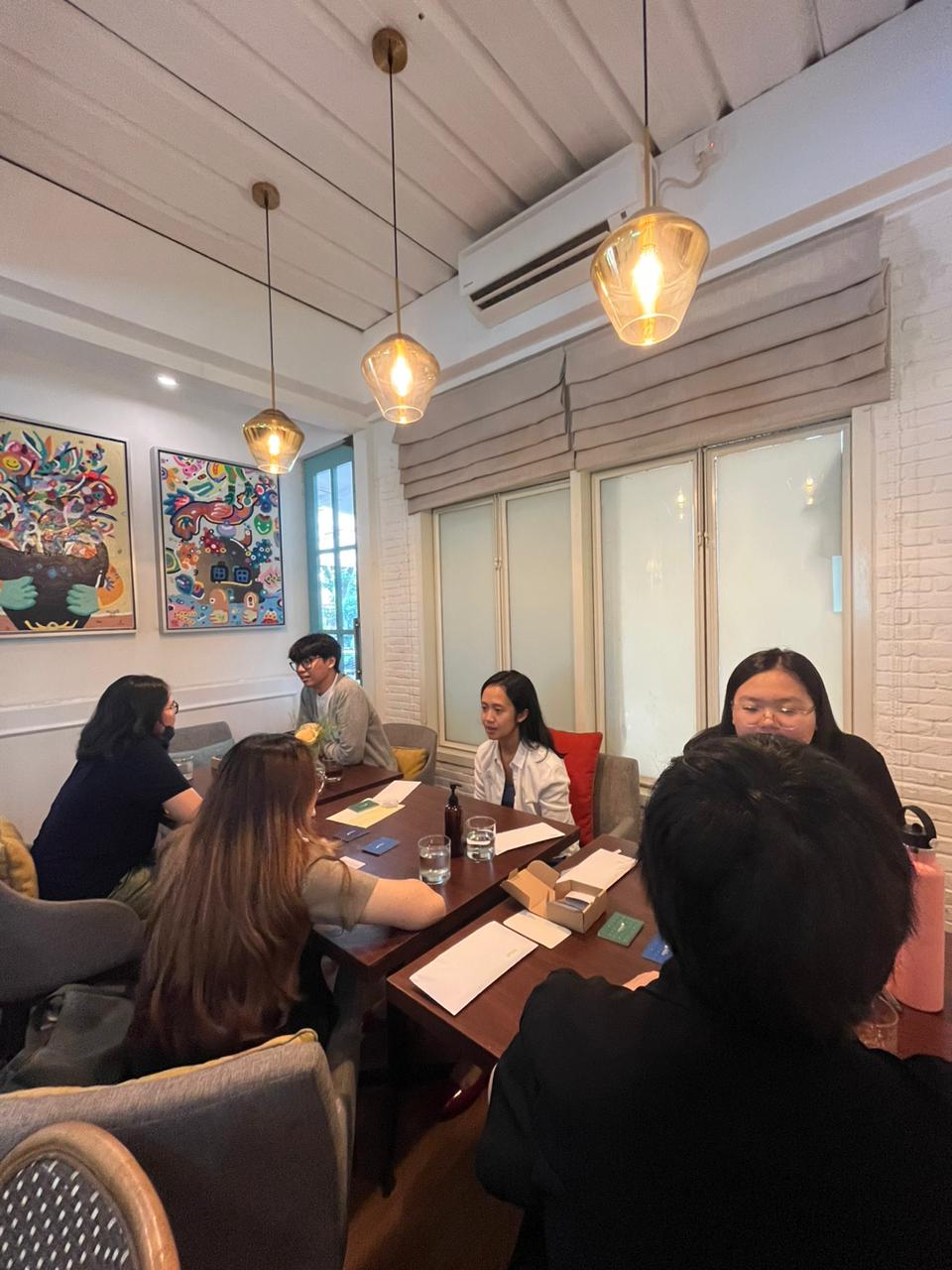
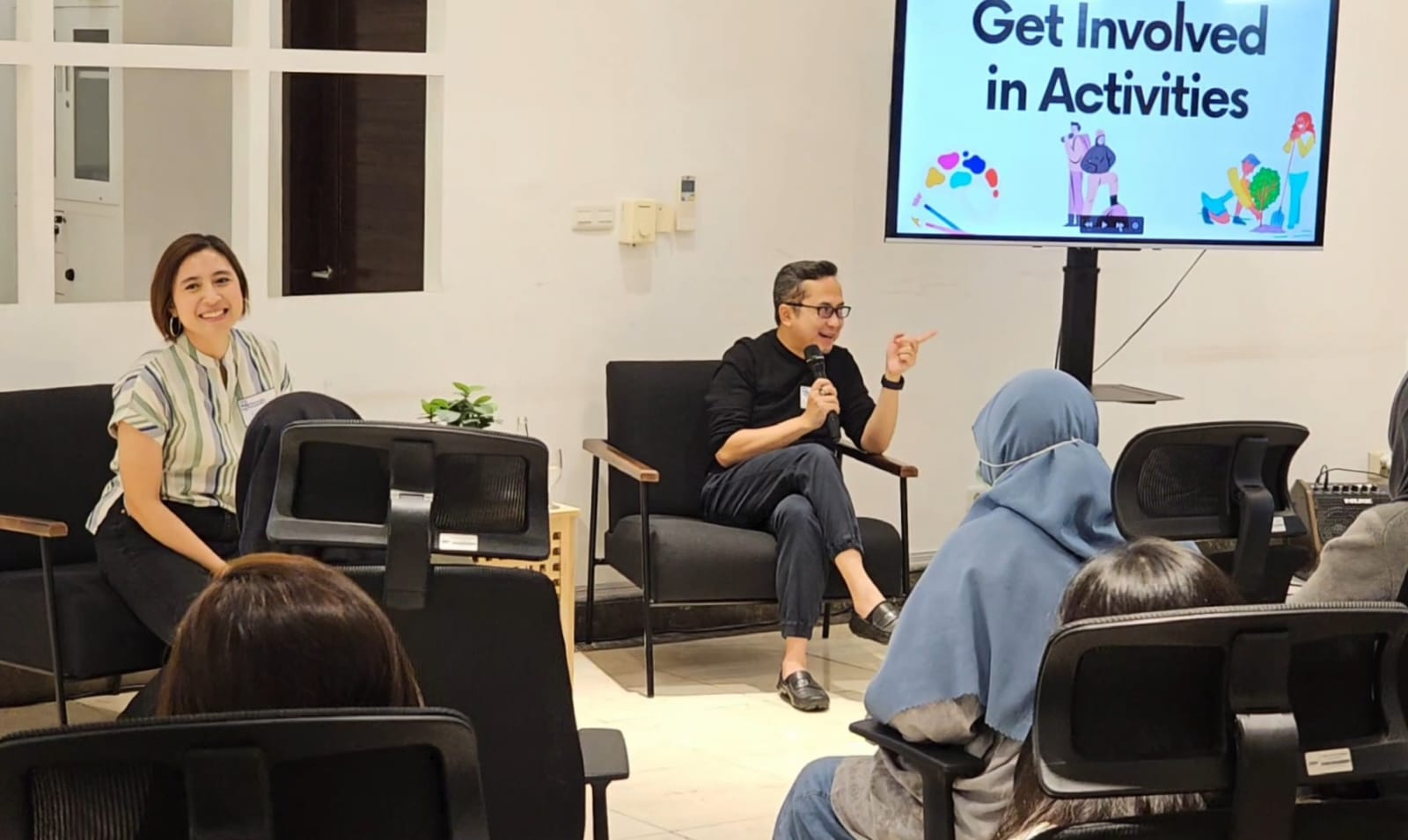
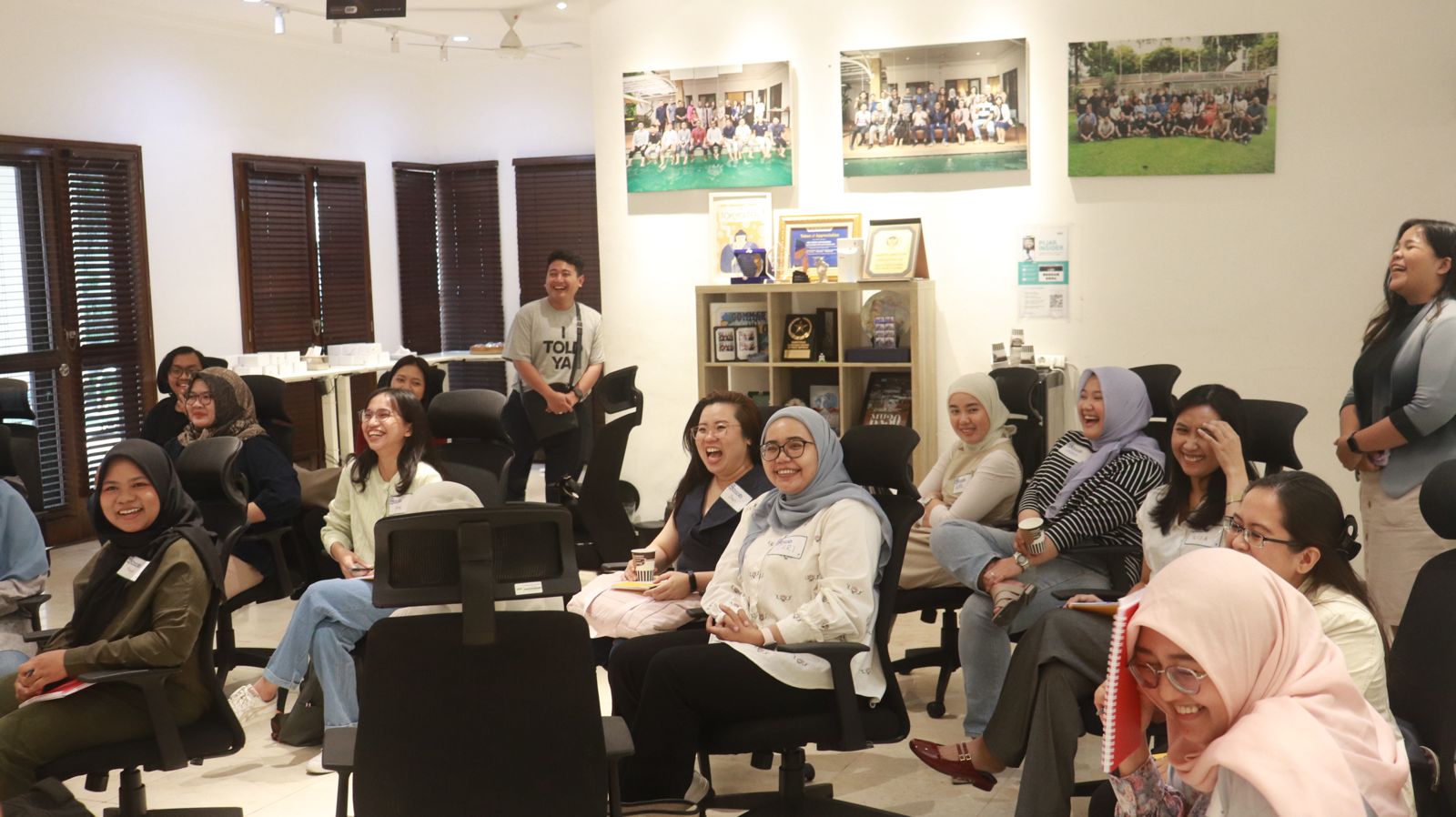
As an introverted person, incorporating goals centered around self-awareness while involving others has always been a challenge for me. However, last year, I took a bold step and initiated a community event called Unplugged. Over the course of four three-hour sessions, we created a space dedicated to engaging deeply with our thoughts and cultivating self-awareness, free from the distractions of smartphones. Each session was thoughtfully designed, focusing on activities like journaling for introspection, networking to foster meaningful connections, and communication exercises to enhance our ability to express and understand ourselves.

P.S: I am reviving the community this year by creating another journaling event in 25th of January. STAY TUNED!

*References for this post can be found here.